vendredi 3 janvier 2014

LG G2 Is That really you LG?


There are a lot of smartphones out there now. You know this. To add to the confusion, many companies are now parading out multiple top-drawer phones: think Samsung's Galaxy S and Note series, or the Xperia Z and Z Ultra from Sony. Even LG, whose new G2 flagship I'm poring over this time around, has both the G and G Pro to tempt buyers. It's getting increasingly difficult to launch a smartphone with some standout feature, something more than just bigger screensand faster processors.

For the G2, LG's decided to make a major change to the phone's physical layout -- in a bullet-point summary, it has buttons on the back. Three, in fact. LG reckons that as the size of smartphones has increased, at this point, the viability of buttons around the edges is now questionable. The new G model lands between last year'sOptimus G and the Pro size-wise, breaking through the 5-inch screen barrier with a bright 5.2-inch, 1080p IPS screen. The rest of the feature set will seem familiar to anyone who's read a flagship Android phone review in the last 12 months. Optical image stabilization, remote control blaster, a mixed bag of proprietary software features and Android 4.2.2. There's also some new stuff, including 24-bit / 192kHz audio recording and playback, and it could well be the first Snapdragon 800-powered smartphone to reach US stores -- that's Qualcomm's most potent mobile processor yet. But with IFA just finished and the Galaxy Note 3 now official, is a button transplant going to be enough? In fact, that's a red herring, because there's actually a far better reason to buy the G2 -- and it's none of the above.


LG hasn't broken the mold with the G2. It doesn't stop me from whimsically looking back to the HTC One or the iPhone -- high-water marks in smartphone design -- but it's no eyesore either. From the front, it's like a conceptual sketch of a smartphone made real. What's impressive, though, is how when you switch the G2 on, that front surface just comes to life. LG has squeezed a 5.2-inch screen into a phone with the same footprint as 5-inch devices like the Galaxy S 4. How? With 0.1-inch-thick bezels, made possible by a new display touch-sensor using two connectors. Even above and below the screen, there's only 0.4 inch of space before the phone's edges. The lower part has an LG logo and nothing else (Android buttons are of the on-screen variety); above you'll find the loudspeaker, light sensor and front-facing, 2.1-megapixel camera. There's also a satisfying curve to the Gorilla Glass 2 front, similar to what you'll find on the Nexus 4 and recent Lumias. It adds a pinch of class to what is (at least from the front) an otherwise standard-looking handset.


It's when you flip the phone over that we begin to see a bit more flair. Aside from the rear-button trio, there's a glossy patterned finish to this black model, and while the pattern helps disguise it a little, it loved my fingerprints; completing our typical melee of glamor shots with the G2 bordered on an exercise in futility. I'd advise carrying around a cloth if you're averse to smears.

The lack of a removable battery cover is going to aggravate power users looking to swap out batteries and SD cards, but the payback is in the solid build quality -- and also the fact that you get more space for the battery. If I prodded the back with a bit of force, I could see the plastic flex a little, but not enough to detract from the otherwise sturdy design.


The volume buttons on either side of the primary power nub are covered in a matte, almost gritty finish, which means they stand out from the phone's glossy background and also offer a little bit more grip. The power button is surrounded by an LED outline, but it's not capable of the same fancy light show seen on the Optimus G Pro's power switch. Nope, those tricks are found in the front-facing LED notification light, and you can choose whether that front-facing one will inform you of calendar events, alarms, missed emails, calls or just tell you when the phone's charging. The rear LED will flash for incoming calls and alarms only.

There are no other buttons on the device, which is a little daunting at first. If you've ever moved from a Google device to an iPhone, or simply switched to a different brand within Android, you'll know it takes a while for you to get used to the new button arrangement. With the G2, double that. Then add a day. I had to recalibrate how I held the phone, to ensure my index finger was in the right place -- meaning a few inches higher than I normally do. A big deal? No, but it certainly felt slightly more precarious in the hand than usual. LG has made some efforts to reduce the issue: two taps to the screen will wake the G2 up, lessening your need to reach for the power button on the back.

As I continued to use the G2, however, I became more at ease with the button placement. The raised portion that houses the power button was the most prone to bumps, but it didn't result in any long-term scratches. In fact, I preferred to leave the phone facedown on surfaces and let the Gorilla Glass 2 do its job protecting the G2's beautiful display.


Is a 5.2-inch IPS screen with 1080p resolution the limit of what we can call a smartphone before classifying it as another smart-device bridge between tablets and phones? At the moment, yes. At just less than 5.5 inches tall, it's a tight call. You'd think smaller hands would likely fare better with a 5-inch screen, but the G2's shaved dimensions mean it's really not much different than the Xperia Z (5.47 inches), the GS4 (5.38 inches) or even its predecessor, the Optimus G, which measures 5.2 inches. All told, it's definitely a notch below the likes of the G Pro or Galaxy Note II.

LG's IPS smartphone displays are some of the best in the business. Bright and rich, with great viewing angles, I've got no gripes with them -- alongside HTC's Super LCD 3, this is the level I want to see in all future smartphones. This 1080p, 5.2-inch version was suitably bright in harsh sunlight, although the auto brightness setting didn't seem to work at all on this model -- something I'm chalking up to this being an early build. Alongside the IPS display, LG has added in Graphic RAM (GRAM), which adds a memory cache of the screen when static, meaning when the screen isn't changing, the CPU and GPU don't have to communicate, allowing the processor to cool down and saving on battery burn. LG reckons it can reduce the display's energy use by up to 26 percent. We'll see how that fares in the battery test section.

Stepping up to complement the richer visuals, LG's included 24-bit / 192kHz music support --- for recording and listening -- on both FLAC and WAV files. Now, you'll have to be using those sorts of files to begin with, but the G2 is the first to support audio at a level above CDs, and for that it should be lauded. However, it's not the earth-shaking feature LG likely wants it to be.


mercredi 1 janvier 2014

S Pen Stylus Efficient Use On The Samsung Galaxy Note 3


Samsung has added numerous new features to its S pen stylus to enhance its functionality in the Samsung Galaxy Note 3. The new phone is scheduled to launch this week. With a high resolution 5.7 inch display, a 2.3GHz quad-core processor and 3GB of RAM, the upcoming Galaxy Note 3 is bigger and better in all aspects. Given all these features, the device is still going to be slimmer and sleeker as compared to previous Galaxy Note models. The features of the S Pen stylus have been amazingly increased. Here are some tips to use the S Pen stylus properly in order to make the most out of it.


  • Air Command: Removing the stylus from its location, which is at the right bottom corner of the Galaxy Note 3, will automatically open the Air Command menu. The popped up menu gives you quick access to various features of S Pen, including S Finder, Scrapbooker, Action Memo and many more.


  • Action Memo: The feature allows you to quickly take hand written notes. These notes can be linked to different actions as well like you can call on the number which you noted down or add it to your contacts or even send a message or an e-mail to it. Galaxy Note 3 has the ability to automatically respond to what you write down, so not does it only recognize what you note, but also offers actions accordingly.

  • Scrapbooker: With the Scrapbooker feature, you can select a certain portion of the screen and take a screen shot of it. This feature comes in very handy when you have to save a specific part of a document or save just a certain portion of the screen. After taking the screen shot, you can also add tags or write notes about it. 
  • Screen Write: The feature is not new in Galaxy Note 3, as it was also present in Galaxy Note 2. The feature allows you to take screen shots of the entire screen and then you can add notes on the top of the captured picture. 
  • S Finder: A brand new feature in the Galaxy series which allows you to search for almost anything on your device. Whether it is a contact, an application or even a hand written note, S Finder can find it all for you within seconds. 
  • Pen Window: It is undoubtedly one of the best features of the new Galaxy Note 3. It is basically a multi tasking feature which allows you to select a certain portion of the screen and then offers you a variety of applications to launch within the selected portion on your screen. Once you have launched an application, you can also increase or decrease the size of the selected portion, resizing the application automatically, and even move it around the screen to place it somewhere else. Moreover, you can also minimize the application or expand it to full screen mode. And that is not it, you can launch multiple applications using Pen Window feature.


Apple vs Samsung

I let you with these two vídeos have fun watching them.


Apple in 2014: iPhone 6 giant iPad, iWatch


After the 2013 fiscal year subdued, the American brand relies heavily on the new year.

Apple expects the rebound. A decried iPhone 5c for its high price, market shares declining and financial results subdued: Apple has not really shone in 2013. But the Californian brand could rebound in 2014: the Cupertino company could launch a large screen iPhone 6, a giant iPad and even a watch connected. An overview of novelties expected for the company.

A big screen IPhone (finally)? With its 4 inch (10 cm diagonal), iPhone 5s (as well as the iPhone 5 and 5c ) are among parts of the smallest smartphones on the market. Rumors of a larger display spreads for months now, but 2014 should be the year of many changes in the Apple side. In an email sent to employees Tim Cook, CEO of the American brand, evokes " major projects " for his company to the edge of the new year. What revive speculation about an iPhone 6 could rise to 5 inches,about 12.7 centimeters. As his best enemy, the Samsung Galaxy S4 .


A giant iPad for pros? The information comes this time from a Korean newspaper The Korea Times. After the iPad mini and iPad Air, the company co-founded by Steve Jobs think of a bigger size for the tablet. According to the Korean newspaper, an iPad with a 12.9 inch screen (about 33 centimeters) would be in the pipes. According to this source, engineers have developed a display with a high definition resolution: 4096 x 2160 pixels, Ultra HD (ex-4K). The Apple brand would, with such a product, prepare the decline of conventional laptops: During the third quarter, Apple has sold 7% of such devices less compared to last year during the same period.


The connected watch iWatch at the time of 2014? Samsung (almost, Sony already offering its SmartWatch in last few months)  fired the first shot with its Galaxy Gear: Connected watches should be to the honor next year, as Tim Cook hinted in an interview in May. The iWatch ( unofficial name) is already preorder from two Taiwanese electronics firms, which already assemble products for Apple. This smart watch that could display emails, SMS or Facebook status directly on the wrist ,could see the light in 2014.


mardi 31 décembre 2013

The New Samsung Tab 3 10.1 2014 edition


Stylus-equipped devices have become more and more uncommon over the last decade or so, but Samsung is still pushing the aged input method to new smartphones and tablets with its Note line of products. While many of us are completely content with just using our fingers, there are still those out there that enjoy hand-writing and casually drawing—and for that audience, the new Samsung Galaxy Note 10.1 - 2014 Edition tablet hopes to deliver a great combination of built-in stylus app support, solid hardware, and a trusty Wacom digitizer.

But the signature Note accessory does, literally, come at a cost. At $550, the new Note 10.1 is priced higher than similarly-sized devices from Apple, Microsoft, and other Android manufacturers. If a stylus isn't important to you, then the premium Samsung tablet likely won't be either. But if you're the type who prefers the feel of a pen in your hand over the touch of glass against your fingertips, this could be the tablet you've been looking for.


Like the recently released Galaxy Note 3 smartphone, Samsung's newest Note tablet is equipped with a faux-leather rear casing. I was surprisingly fond of the unique finish on the oversized phone, and am glad Samsung went the same route with its larger Android device. Previously, the company's overzealous use of slippery plastic caused issues, but the leather-like backing adds some extra grip, whether holding the device in hands or when placed on a surface.

A plastic metallic band surrounds the edges of the Note 10.1, with stereo speakers near the top of each side (when holding the device in lanscape orientation), a headphone jack on the left, the stylus housed on the right side, with the power button, volume rocker, and IR blaster located at the top of the device. The speakers were plenty loud for personal use, and huddling around the tablet with a couple of your friends to watch videos shouldn't be a problem.

The Note 10.1 is actually quite compact, with a smaller footprint than comparable tablets like the Sony Xperia Tablet Z and Samsung's own Nexus 10. It still has some heft to it, though, weighing more than the aforementioned Tablet Z, but less than than Apple's 4th generation iPad. It's small enough to easily throw into a bag, but heavy enough to not feel fragile.

The 10.1-inch screen bears a high resolution of 2560 x 1600 with a pixel density of 302 ppi, and the liquid-crystal display makes sure content is visible in any lighting condition. In general, the screen always looked great, with video and comic books coming through clearly, as well as text and images from websites.


Our Wi-Fi-only review unit is powered by a 1.9 GHz octa-core Samsung Exynos 5420 System on a Chip and 3GB of RAM, and the Note 10.1 performed great in most situations. The new tablet generally handled Android 4.3 Jelly Bean with ease, but there were still occasional stutters when jumping in and out of menus and apps, a behavior that TouchWiz devices are notoriously known for.

In benchmark tests, the Note 10.1 was at the top of list with AnTuTu Benchmark, slightly edging out the powerful Note 3 smartphone; trailed just behind Apple's iPhone 5S and Microsoft's new Surface 2 in 3DMark tests; and was the top ranked Android tablet when tracked through Geekbench 3. Gaming on the tablet was trouble free. The Note powered through swarms of enemies in Kingdom Rush Frontiers and speedy rivals in Real Racing 3 without any noticeable isses.

Battery life was average, with power staying relatively consistent when in standby mode. Light web and app consumption will get you through days of use, but more intense activities like hours of playing games and Netflix marathons will require you to get to a charger at the end of each day. Unfortunately, the tablet doesn't have the same USB 3.0 connectivity that the Note 3 smartphone includes, so extended charging sessions are commonly required to bring the 8,220 mAh battery back to 100 percent.

The Note 10.1's 8-megapixel rear facing camera is good for a tablet, producing quality photos, although not nearly at the same level of color reproduction and detail that high-end smartphones are currently capturing. It's fine for quick pictures that are uploaded to the web, but if you have a smartphone that was released within the last couple of years, you probably have a better shooter in your pocket.


But the real reason one would buy this particular tablet is Samsung's S Pen stylus. Air Command, which first made its appearance with the Note 3, is available for quick access to a handful of stylus-specific actions, and the included SketchBook for Galaxy provides a full-featured drawing app for artists. Hand-writing recognition also works really well. I actually wrote a portion of this review using the S Pen, and the Note made very few mistakes when translating my chicken scratch into legible text.

Oddly, the stylus is only slighty larger than the one included with the Note 3. It would have been nice if Samsung had packed in a larger S Pen with the tablet, since the one included is thinner than just about any pen or pencil one would use around the house or office.

Unlike many other larger mobile devices, Samsung's Note products make proper use of the bigger displays by offering split-screen and windowed apps. Between Multi-Window view and the stylus-enabled S Window feature, I was able to have 9 apps open simultaneously. It's not likely that you'd ever need to do this yourself, but it shows how versitile the setup can be.


jeudi 3 janvier 2013

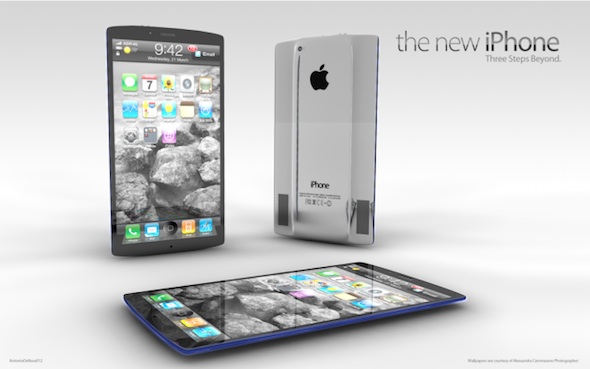
Iphone 6 in the road


Output iPhone 6!

A username and visual appeared on the show website Maypalo.com "iPhone 6.1", a unit test running the next operating system from Apple. So info or intox? A few days ago, the firm Jefferies created a sensation on the Internet explaining that iPhone 6 was currently being tested within the walls of the Cupertino, California.

Well Maypalo site goes even further as states, through the development of a new standard, the 6.1, and most importantly, a new visual, that smartphone famous work in iOS7 is ie the successor of the current operating system from Apple, iOS 6.

IOS 7, more pixels lost!

To see the photo, and if it is not a hoax, the display shows an iPhone running on 4G LTE network (like the iPhone 5), and toggles Weather, network connection settings and system as activating and deactivating Bluetooth and 4G LTE networks or adjusting the brightness of the screen. It also features the battery level, timing or the use of storage memory, as well as messages and calls. In short, the more pixels lost on the large screen of the iPhone!

Viewing customizable icons?

Due to the variability information, one may wonder if the display of the home page is not customizable in their arrangement, their positioning, type and number, which underline the fact of not wasting screen space, but which could therefore inevitably lose readability. The balance is surely the responsibility of iOS, it certainly limits the number of objects on the screen.

Credibility that could not be challenged

Of course, it might seem a hoax. In fact, talking about iPhone 6 7 iOS is come to announce the Galaxy S5 while fans await the presentation of Samsung S4! But still, the site says Maypalo digital signature that is ... Image of Apple. It therefore would not suffer any possible dispute, unless denied by the firm, it would be so much the first photo of the iPhone 6 ... And iOS 7. In addition, the tests indicate that the source would be advanced enough since they would consider installing apps on the new OS and that output would be expected in the first half of 20013.

It would be therefore a real scoop to start the year.

Samsung News

Samsung Series 7 Ultra

Samsung’s PC division is kicking off the CES festivities a little early this week, with the unveiling of two new products in its high-end Series 7 line. The all-new Series 7 Ultra and updated Series 7 Chronos boast some impressive specs and are set to be in full attendance at the company’s CES booth next week. The first thing you’re likely to notice about the updated Series 7 Chronos is that it’s been on a diet. The new system comes in at 0.82 inch (20.9 mm), cutting a few millimeters off its predecessor’s 0.94 inch (23.9 mm) thickness. Unfortunately, that improvement isn't mirrored in the system's weight. The new Chronos is actually slightly heavier than the old model, at 2.35 kg (5.18 lbs) to the original’s 2.29 kg (5.04 lbs).

But fear not, that extra weight has been put to good use, with the system’s internals receiving some significant upgrades. The CPU has been updated with the latest Intel i7 chip (3635QM) and the system can now be configured with up to 16 GB RAM and 1 TB of storage. The display has also received an update from 1600 x 900 to 1920 x 1080 and features 10-point multi-touch functionality and a 300-nit brightness. Lastly, the GPU has been upgraded from the HD6750M to the more powerful AMD Radeon HD 8870M. Despite the high-end specs, Samsung claims that the system will run for up to 11 hours on a single charge.

The high-end Series 7 Chronos is 0.82 inch (20.9 mm) thick

Though the Chronos might be the more powerful of the two, the specs of Samsung’s latest Ultrabook are nothing to baulk at. The Series 7 Ultra will be available with a choice of i5 or i7 processors, will feature up to 16 GB RAM, a 256 GB SSD and, like the Chronos, comes with AMD graphics (albeit the less powerful HD8570M). The system’s 1920 x 1080, 350-nit display will be available in both standard and touch-enabled configurations, with the non-touch version of the notebook coming in at 17.5 mm (0.69 inches) thick. The touch model is a little thicker at 18.9 cm (0.74 inches). It also weighs slightly more, at 1.65 kg (3.6 lbs) compared to the standard model’s 1.46 kg (3.2 lbs) offering. The notebook’s screen will feature 178 degree viewing angles and Samsung claims the system will provide up to eight hours of battery life.

Both systems will run on Redmond’s latest touch-centric Windows 8 OS and will feature backlit keyboards, both USB 2.0 and 3.0 connectivity, an HDMI port, JBL speakers and 720p webcams. There’s no word yet on pricing or availability, but be sure to check back next week for more from Samsung at CES 2013.

mardi 1 janvier 2013

Samsung Galaxy S4


While the 2013 CES in Las Vegas and the MWC in Barcelona just around the corner, new information from the site PhoneArena some specific detail of one of the most anticipated smartphones of tech-savvy: Samsung Galaxy S4. 13 megapixel camera sensor, a processor swift supported by a significant amount of RAM, unbreakable screen, a presentation at MWC 2013 ... Many rumors revolve around the future smartphone-star Samsung Galaxy S4.

And as some key dates approaching, some data intersect, stress, to become real technical issues on which the device would be expected. But other indiscretions, sources say safe, just refresh the rumors hovering over the competitor's future iPhone 5s or support them. This is the case information from the site PhoneArena.com relayed by a source and confirmed by a Korean person working internally at the manufacturer.

These reports indicate the presence of an S-Pen, electronic pen of the famous Note 2, which is therefore now also associated with the Galaxy S, a screen AMOLED technology with a diagonal of 5.5 inches, and displaying a resolution of 1280 by 720 pixels ... but especially the fact that this screen is, as rumors assume perfectly flexible and unbreakable!

That's what's so hide behind the famous innovation Samsung imaged by a campaign to promote very mysterious.

According to the same source, the Samsung Galaxy S4 would be presented at the CES in Las Vegas, which will take place between 8 and 11 January 2013.

mardi 18 décembre 2012

How do touch-screen monitors works?


Touch-screen monitors have become more and more commonplace as their price has steadily dropped over the past decade. There are three basic systems that are used to recognize a person's touch: 
  • Resistive
  • Capacitive
  • Surface acoustic wave
The resistive system consists of a normal glass panel that is covered with a conductive and a resistive metallic layer. These two layers are held apart by spacers, and a scratch-resistant layer is placed on top of the whole setup. An electrical current runs through the two layers while the monitor is operational. When a user touches the screen, the two layers make contact in that exact spot. The change in the electrical field is noted and the coordinates of the point of contact are calculated by the computer. Once the coordinates are known, a special driver translates the touch into something that the operating system can understand, much as a computer mouse driver translates a mouse's movements into a click or a drag.
In the capacitive system, a layer that stores electrical charge is placed on the glass panel of the monitor. When a user touches the monitor with his or her finger, some of the charge is transferred to the user, so the charge on the capacitive layer decreases. This decrease is measured in circuits located at each corner of the monitor. The computer calculates, from the relative differences in charge at each corner, exactly where the touch event took place and then relays that information to the touch-screen driver software. One advantage that the capacitive system has over the resistive system is that it transmits almost 90 percent of the light from the monitor, whereas the resistive system only transmits about 75 percent. This gives the capacitive system a much clearer picture than the resistive system.
On the monitor of a surface acoustic wave system, two transducers (one receiving and one sending) are placed along the x and y axes of the monitor's glass plate. Also placed on the glass are reflectors -- they reflect an electrical signal sent from one transducer to the other. The receiving transducer is able to tell if the wave has been disturbed by a touch event at any instant, and can locate it accordingly. The wave setup has no metallic layers on the screen, allowing for 100-percent light throughput and perfect image clarity. This makes the surface acoustic wave system best for displaying detailed graphics (both other systems have significant degradation in clarity).
Another area in which the systems differ is in which stimuli will register as a touch event. A resistive system registers a touch as long as the two layers make contact, which means that it doesn't matter if you touch it with your finger or a rubber ball. A capacitive system, on the other hand, must have a conductive input, usually your finger, in order to register a touch. The surface acoustic wave system works much like the resistive system, allowing a touch with almost any object -- except hard and small objects like a pen tip.
As far as price, the resistive system is the cheapest; its clarity is the lowest of the three, and its layers can be damaged by sharp objects. The surface acoustic wave setup is usually the most expensive.


howstuffworks.com


lundi 17 décembre 2012

The new samsung Galaxy Note


Undeniably one of the surprise tech stories of 2011, the Samsung Galaxy Notesold in bucket loads proving that the niche product actually had mass appeal.

Having already served up the improved S-Pen technology with the bigger screen surroundings of the Samsung Galaxy Note 10.1, the Samsung Galaxy Note 2 ‘phablet’ brings more inches, power and multi-tasking prowess to the party with a device that fits snug in the pocket.

Samsung Galaxy Note 2: Build

Taking clear design cues from the Samsung Galaxy S3 smartphone, think of the Note 2 as a kind of super-sized version of the flagship handset, swapping straight lines for sleeker curves and a white paint job "inspired by ‘nature", so the marketing blurb tells us.

At 9.4mm thick, it’s slimmer than the original Note (9.65mm) but not as slender as the Samsung Galaxy S3 (8.6mm), but at 182.5g heavier than the original Galaxy Note (178g).

In terms of the key physical features, you’ll find the rounder home button at the bottom of the screen flanked by two capacitive buttons. The power button is situated on the right edge of the device with the volume rocker on the opposite side while the charging micro HDMI cable port sits at the bottom of the handset.

The 3.5mm headphone jack sits at the top and hiding at the bottom right hand corner is the new, more accurate S-Pen. At the back sits the 8-Megapixel camera with flash alongside it and the loud speaker at the other end.

Behind the replaceable cover you’ll find the microSD card slot which can expand storage to 64GB and the microSIM slot which will give you phone functionality.

Putting this to your ear to make a call is still likely to draw strange looks, but the more curved design actually makes it feel not so abnormally large in the hand. It does seem more suited to a handbag, manbag or inside jacket pocket than a pair of jeans though.

Samsung Galaxy Note 2: Features

Android 2.3 Gingerbread out of the box, the first Galaxy Note is now Android 4.0 Ice Cream Sandwich friendly but the Note 2 actually has Android 4.1 Jelly Bean update out of the box.

Samsung’s TouchWiz UI is overlaid on top bringing seven homescreens instead of the Android standard of five, its own web browser, app drawer and branded apps like S-Suggest and S-Planner scattered all over the place.

You can also reap the benefits of new Jelly Bean features including Google Now and expect a speedier UI performance and reduced lag thanks to Project Butter.

Following on from the Note 10.1 the advanced smart pen is based around the same tech found in the Wacom digitizer which means you can expect improved pressure sensitivity while you are being creative.

Samsung

vendredi 13 juillet 2012


بسم الله الرحمان الرحيم

بلغ السيل الزبى


بلاد الإسلام و المسلمون الان في امس الحاجة الى من يوجههم مع توالي الأحداث و تتابع المجريات التي غيرت الكثير من احوال الناس. فكما تعرفون جميعا الإنسان العربي متقلب المزاج و سريع الغضب, و محاولة التغيير السريع لا تنجح في غالب الأحيان فكيف مع تواجد هذه الصفات. الحكم السريع على الأحداث يقود في غالب الأحيان إلى الوقوع في ما لا تحمد عقباه و ما لا يغتفر و إصلاح ذلك يتطلب الكثير من الجهد و العمل المجد. لكم الله يا اهل سوريا و يا اهل بورما , الله الله للاسلام, الله الله للمسلمين, الم نكتف بعد من التثاقل و التراخي و اتباع الهوى, الم نهتد بعد الى السبيل القويم, اني لا ادعو الا الى العمل على النفس و اصلاح الحال و تكوين الشخصية الإسلامية الحقة الكفيلة بتقوية الإسلام و المسلمين و بناء المجتمع السليم. لا شك ان الكثيرين يعتقدون ان الاسلام لا يصلح كمنهج لقيادة دولة, هذا التفكير الرجعي سببه اننا نحاول اصلاح ما افسده المفسدون عن طريق إدخال معتقداتهم الفاسدة و دمجها مع تعاليم الاسلام, لاتخاذ ذلك سببا لالقاء اللوم على الاسلام و تاكيد ما يصدحون به من انه لا يليق ليكون منهجا و طريقا للاصلاح. و للاسف فالكثير من الناس ينجذبون الى هذا الطريق, و ينسون ان الطريق الى النجاح واحدة, و انه لا بد من المرور بهذه الطريق للوصول و لاعداد نظام قادر على الوقوف امام التحديات و الصعاب, و مواجهة المخططات الرامية الى إلصاق صفات مثل الرجعية و التخلف و مقاربات مثل التشدد و الارهاب بالاسلام و المسلمين. من هذا المنطلق يتبين الحقد الدفين الذي يكنه الاعداء, و ما يخفونه تحت عباءة حقوق الانسان للتطاول و ايجاد السبيل للاساءة لكل ما يقرب الاسلام. و ما يحز في النفس اكثر هو ان من ابناء جلدتنا من يعينهم على ذلك, بل و يمهد لهم الطريق. المهم الان هو ان نعرف الطريقة الصحيحة لانجاز الامور و عدم التسرع في اتخاذ القرارات التي من شانها تحديد مصير امة باكملها.
لا شك انكم تتساءلون عن علاقة ما اتحدث عنه بسوريا او بورما, كيف لا يكون لذلك علاقة و الناس لم يضربوا حسابا لهذا العدد الهائل من الخسائر البشرية؟ و كيف اصبح الحديث عن قتل المئات يوميا يعد شيئا عاديا؟ لماذا نتجاهل هذه الحقيقة المرة و نقف مكتوفي الايدي امام ما يحدث؟ بل و بعضنا يستمتع بعطلة الصيف في ارقى المنتجعات و اخواننا نحسب جثتهم كل يوم؟ كيف و قد ذهب نصف السودان و نحن مشغولون بالصراعات الداخلية في غفلة عما يحدث حولنا؟ يقتل المئات يوميا بل الآلاف في بورما و نحن نتفرج.  حسبنا الله و نعم الوكيل اين ذهبت عقولنا و كيف اصبحت حالنا يرثى لها. وكيف انتشرت الدعارة و الفجور في مجتمعنا, و استباحة المحارم اصبحت من صفاتنا, التبرج ملا الشوارع و اصبحنا نشاهد الافلام الخليعة على المباشر و امام مرأى الجميع. كيف و انت ترى الاب يصحب بنته الى الجامعة و هي شبه عارية, فاقل ما يقال عنه انه ديوث يقبل الفاحشة في اهله. لم نعد نكتفي بالمصافحة بين الفتيان و الفتيات رغم انه ان يغرز في راسك مخيط اهون من ذلك كما قال رسول الله صلى الله عليه و سلم بل انتقلنا الان الى التقبيل علنا دون خشية و لا حشمة, و الله صرت اخاف على نفسي من هذا كله, و اخاف على اهلي و على اصحابي. اعذروني على هذه الكلمات الثقيلة لعلها تحرك قليلا من الغيرة على العرض بيننا و تزرع فينا شيئا من المسؤولية تجاه الاسلام و المسلمين, و تحسسنا بالمسؤولية على عاتقنا.

mercredi 11 mai 2011

concept de soi

 L'image de soi est le produit de la façon dont nous croyons que les autres nous voient 

Image de soi  =    La façon dont nous croyons que les autres nous voient.  

      =>   nous agissons fréquemment en fonction de ce que nous pensons que
        les gens attendent de nous et pas en fonction de ce qu'ils attendent
        réellement de nous.  


mercredi 13 avril 2011


HOPE
I hope you find a way to success, i hope you find a dream to realize.


Le débat


Le débat 

I. Le débat dirigé :
a. La préparation :
·       Le débat se prépare et ne s’improvise jamais.
·       Le sujet choisi doit intéresser fortement. Ex : un sujet d’actualité.

b. La répartition des tâches :
§  Le président de séance réfléchit soigneusement au sujet, prépare des questions et des points particuliers, recherche des réponses et des exemples.
§  Deux responsables préparent le sujet selon les deux points de vue les plus opposés. Ils prévoient des questions, des arguments, des faits, des exemples…
§  Les participants connaissent le sujet quelques jours avant la séance (l’intitulé, la situation, les questions, etc.).

c. Le déroulement de la séance :
v Au début, le président présente rapidement le sujet, montre l’intérêt, ouvre des perspectives de discussion et annonce l’organisation générale du débat.
v Au cours de la discussion, il prend des notes, donne la parole et empêche les interruptions, évite les digressions en rappelant le sujet et en faisant le point de la discussion, empêche les interventions trop longues, l’anarchie de la discussion et les conversations particulières. Mais, il ne doit pas imposer son point de vue. Il relance le débat si c’est nécessaire en posant des questions appropriées, essaye de faire parler tout le monde, cherche à faire dialoguer entre eux les participant.
v En fin, il fait une synthèse rapide des opinions présentées, des solutions apportées et des questions laissées en suspens.


d.    Les structures du débat :
(i)          Un responsable présente la thèse. Les participants interviennent. Le deuxième responsable présente l’antithèse.
(ii)        Les responsables présentent leurs idées alternativement, à tour de rôle. Et, la discussion s’engage.
(iii)       Après la présentation du président, la discussion s’ouvre. Les responsables interviennent aux moments opportuns pour avancer les arguments.

II. Le débat libre :
Le débat libre se pratique surtout au sein des petits groupes où il n’y a pas un grand besoin d’organisation. On n’y trouve ni président, ni responsables, mais seulement un organisateur. Les participants échangent leurs idées avec autonomie, franchise et sincérité. En même temps qu’il communique avec autrui, le sujet continue à vivre dans son univers subjectif. Il ne cherche pas à complaire ni à se projeter dans l’image du groupe. Il n’y aura pas de risque à parler, ni de sanction, ni de reproche. Ce type de débat marque donc une grande implication des participants.

Le rôle de l’organisateur :
Il s’efface et il n’intervient que rarement. Sa fonction se résume à reformuler fidèlement les points de vue. Il s’abstient de formuler des jugements, de proposer des interprétations, de donner des questions. A la fin, il témoigne des attitudes qu’il aurait remarquées et il récapitule l’essentiel.

Le rôle de la décision :
Il est souhaitable d’avoir un objectif et de prendre une décision. Celle-ci se définit par quatre questions : quoi (contenu) ? comment (moyen) ? qui (acteurs) ? quand (délai) ?

Principes de tout débat :
ü Clarté et pertinence de l’émetteur,
ü Ecoute active du récepteur,
ü Tolérance, respect et compréhension mutuels.

lundi 4 avril 2011

Les Pas Pour Arriver au Succès


Définition :
Le développement personnel renvoie à toutes les activités proposant de développer une connaissance de soi, de valoriser ses talents et potentiels, de travailler à une meilleure qualité de vie, et à la réalisation de ses aspirations et de ses rêves. Les psychanalystes, les promoteurs de techniques New Age et certains courants du coaching font des propositions de développement personnel pour les particuliers, tandis que les éducateurs et spécialistes du travail, comme l'Organisation internationale du travail (OIT), l'incluent dans les buts institutionnels de l'enseignement supérieur et du travail décent.
Le développement personnel, parfois appelé « épanouissement personnel » ou « croissance personnelle » recouvre un ensemble de pratiques disparates visant à développer des aspects positifs, connus ou inconnus, de sa personnalité ou à atteindre une certaine sagesse.


Historique:
            La plus grande partie des techniques de développement personnel est associée au New Age, lequel aurait trouvé son inspiration dans les années 1920 auprès de la théosophie (Helena Petrovna Blavatsky, Alice Bailey, etc. ), du bouddhisme et de l'hindouisme. Une seconde inspiration serait l'Ère du Verseau de Paul Le Cour mais aussi les valeurs et utopies de la génération "Peace and Love".
            Les années 1970 sont propices à l'exploration psychique, certaines personnes expérimentent la consommation de substances psychotropes, comme le LSD utilisé en premier lieu comme moyen thérapeutique par Timothy Leary


Le Développement personnel dans la psychologie :
C'est principalement les travaux d'Alfred Adler (1870-1937) et de Carl Gustav Jung (1875-1961) qui ont été associées au développement personnel, qui n'existait pas à leur époque.
Alfred Adler refusa de limiter la psychologie à son rôle thérapeutique en insistant sur l’idée que les aspirations humaines sont tournées vers l’avenir et pas seulement le fruit de moteurs inconscients ou d’expériences infantiles. Fondateur de la psychologie individuelle, il est aussi à l’origine du concept de « style de vie », qu’il définit comme une approche personnelle de la vie, où chacun se forge une image de soi et a sa manière de faire face aux problèmes. Ce concept a influencé le management qui l’a traduit par la recherche d’un équilibre entre vie professionnelle et vie personnelle.
La plupart des concepts du psychiatre suisse Carl Gustav Jung ont été récupéré par les théories modernes du développement personnel, tels la synchronicité, les archétypes, l'inconscient collectif, sa vision du rêve et surtout le concept central dans sa théorie, d'« individuation ». L'individuation traduit le processus par lequel un individu devient une totalité, suivant l'archétype du Soi. Pour Carl Gustav Jung, l’individuation est un processus de différenciation psychologique, destiné à harmoniser les rapports du conscient avec l'inconscient et ayant pour but le développement de la personnalité de l’individu. Les apports de Jung ont nourri en premier lieu les psychothérapies d’inspiration psychanalytique (P.I.P) puis les théories managériales (surtout ses typess pychologiques, avec le MBTI) conduisant au développement personnel, or pour les continuateurs officiels de Jung, beaucoup de ces travaux ont été mécompris. Selon le sociologue Luc Mazenc « l’impact de la pensée de Jung sur la dynamique d’émergence du New Age est fondamental » .
Le concept des stades de vie a été développé dans les années 1970 par le chercheur Daniel Levinson (1920-1994) dans une perspective psycho-sociologique. Bien que les sociologues ont du réviser les stades décrits par Levinson, sa contribution principale pour la recherche en développement personnel est l’influence des aspirations dans le parcours du jeune adulte, ce qu’il appela le « Rêve »


Les passoires conduisent vers le développement du soi :
Etre soi-même :
·         Comment se fait-il qu'il soit difficile d'être soi-même, si c'est notre désir ?
Etre soi-même va de pair avec la connaissance de soi. Ce n'est pas une introspection où l'on essaye de voir en soi, c'est un parcours. Mais c'est un parcours qui fait quand même un peu peur.  Apprendre à se connaître est un chemin qui va nous dévoiler des choses sur nous-mêmes qui ne sont pas idéales.
·         Se dégager des mauvaises images de soi :
Je commence à me dégager quand je comprends que ce que je perçois n'est pas tout moi ou tout l'autre. Comment pouvons-nous vivre ce dégagement ? C'est déjà en arrivant à repérer ce qui en nous est mouvement de colère. Souvent nous ne sommes pas conscients de ce qui se vit en nous.  Souvent La souffrance met le doigt sur quelque chose à changer. Si nous voulons sauver notre bonne image de nous-mêmes, nous nous perdons.
·         Oser être soi...
Un autre point décisif pour habiter sa véritable identité, c'est accepter la différenciation. Ça peut paraître évident mais c'est vraiment une difficulté.  Devenir soi-même c'est vivre une certaine séparation différenciatrice. Là on touche un point délicat. C'est un aménagement mais y a-t-il vraiment séparation intérieure ?
·         .. Et même mieux
"Heureux celui qui devient lui-même !" : aujourd'hui notre monde  met l'accent sur ça. Il y a une exacerbation de l'épanouissement personnel. Devenir moi, c'est de plus en plus vivre que ma valeur ne dépend pas du regard des autres. On a besoin du regard des autres, mais on ne doit pas en être dépendant.


Savoir dire non :
·         Etablir ses limites : une question de survie
L'homme est naturellement  un être de relation. Mais comment établir des relations saines tout en restant parfaitement soi-même ? Autrement dit, comment définir et préserver ses choix personnels..
Savoir quelles sont nos limites et les respecter nous permet de définir qui nous sommes et qui nous ne sommes pas. Formuler ce que l'on ne veut pas.
·         Un certain nombre de choses peuvent nous empêcher d'établir nos limites
  * Une vision déformée des autres. Si nous nous sentons responsables des déceptions des autres,
  * Une vision déformée de soi. On peut croire que poser ses limites, c'est mal.
·         Pour savoir dire non, il faut...

§   Prendre conscience de soi
§  Apprendre à dire non lorsqu'on a envie de dire non, quoi qu'il puisse arriver
§  Arrêter de blâmer les autres, de juger leurs choix ou de leur reprocher notre incapacité à dire non 
Définir nos limites nous permet de construire notre moi et nous aide à choisir ce que nous voulons et pouvons donner.


Astuces pour mal gérer sa vie :
Voici une liste des choses à faire pour ne pas être une personne équilibrée :
·         Ignore ta santé
Ne dors pas suffisamment ; ne prends pas le temps de faire de l'exercice ; ne mange pas équilibré.
·         Ne prends pas le temps de voir tes amis et ta famille
Si tu veux finir mal, ne prends pas le temps de vivre, cours sans cesse d'une activité à une autre, ne prends pas le temps de te poser ni de réfléchir à ta vie.
·         Garde-toi de te développer intellectuellement
Tu révises, tu travailles pour avoir ton diplôme ou ton année. Et après ? Tu n'auras peut-être plus envie de mettre les pieds dans une bibliothèque pour y chercher un livre. La télé est si facile à regarder ! Mais les livres c’est difficile  à ouvrir !! En espérant que tu as rempli suffisamment ton réservoir intellectuel pour garder tes connaissances toute ta vie.
·         Surtout ne cherche pas à t'améliorer
Ne cherche pas à changer les circonstances de ta vie, Reste dans la même voie. Ne prends pas les occasions et ne cherche pas les possibilités offertes par la vie pour être mieux. Fais uniquement ce que tu veux, quand tu veux   


Comment gérer la colère :
Tu rates ton bus, tu renverses ton café, tu oublies un rendez-vous important… Il y a tellement d'occasions de s'énerver! Comment es-tu quand tu es en colère ?
Pour bien gérer quelque chose, il faut en savoir l'origine et le fonctionnement. La colère est une émotion nécessaire et normale …….
·         Y a-t-il une façon équilibrée de gérer la colère ?
Oui ! Il est tout à fait possible de "bien être en colère", tout comme il est possible de traiter la douleur de façon saine. Mais c'est un apprentissage que l'on ne fait malheureusement pas. Voici plusieurs étapes à suivre pour parvenir à contrôler sa colère.
1.       Prends ta respiration :
Lorsque tu es en colère, ton cœur produit de l'adrénaline qui augmente ton rythme cardiaque. En respirant profondément, tu calmeras ton rythme cardiaque et tu pourras baisser ton taux d'adrénaline.
2.       Prends du retrait par rapport à la situation dans laquelle tu es :
Si tu sens la colère monter, éloigne-toi et donne-toi l'occasion de te contrôler. Si tu es en conflit avec quelqu'un, dis-lui que tu as besoin de réfléchir et de te retirer. Le sport va t'aider à extérioriser ton trop plein d'énergie pour pouvoir faire face au problème avec la tête froide.
3.      Examine les racines de ta souffrance.
La colère doit nous servir. Nous n'avons pas à en être l'esclave. Elle nous avertit par rapport à notre fonctionnement. Il faut donc prendre le temps de s'arrêter pour voir ce qui se passe en nous, devenir plus conscient de nous-mêmes pour être plus en accord avec nous-mêmes. Il se peut aussi que tu sois enclin à la colère lorsque tu es fatigué ou stressé. Évite alors les conversations à enjeux dans ces conditions. Donne-toi le droit de dire dans ces conditions.
4.      Cherche à clarifier la situation avec l'autre
Pour désamorcer une dispute, il faut parler des faits et de ce que l'on ressent, pas de ce qu'on suppose que l'autre a voulu faire ou dire. Laisse également à l'autre l'occasion de s'expliquer, de préciser certains détails, de dire lui aussi ce qu'il ressent. Ainsi, tous les deux, vous aller progressivement clarifier la situation et résoudre le conflit.
Entraîne-toi à faire ces étapes : tu en bénéficieras toute ta vie et en feras bénéficier les autres autour de toi. Je te souhaite bonne colère !


Gérer le stress :
« Le stress est la réponse non spécifique que donne le corps à toute demande qui lui est faite ».
 Comprendre le langage de notre corps.
Mieux gérer le stress, c'est anticiper nos réactions avant de mal agir, ou en faisant subir nos émotions à notre entourage. Notre organisme a sa façon à lui de répondre au stress, souvent bien avant que nous soyons conscients de ce qui se joue en nous. La peur, la colère, l'excitation, la tension nerveuse s'expriment différemment selon les individus. Notre corps nous envoie des signaux qui, si nous apprenons à les décoder...
* Gérer ses émotions
En situation de stress, les émotions sont souvent exagérées. Il ne faut donc pas s'y fier pour prendre des décisions trop hâtives ou pour dire des choses qu'on regretterait par la suite. Souvent, nos émotions s'expriment avant notre raison, qu'elles soient refoulées à l'intérieur ou qu'elles sortent au dehors. C'est en général : "panique d'abord, réflexion ensuite !". Ce qui peut nous aider, c'est déjà de repérer notre fonctionnement et ensuite d'essayer de ne pas se laisser emballer par nos émotions.
* Eviter les deux extrêmes du fatalisme et de l’activisme.
Le fataliste dit : « Je ne peux rien faire, je dois subir les circonstances. ». C'est la paralysie, la passivité.
L'activiste proclame : « Si je redouble mes efforts, j’y arriverai ! ». On s'agite beaucoup, mais finalement il n'y a pas une bonne utilisation de l'énergie du sur-régime.
* Etre conscient de ses priorités.
Une situation de stress courante dans notre vie d'aujourd'hui est due à nos emplois du temps trop surchargés. Faisons le ménage ! Faisons des choix de priorités et laissons tomber tout ce qui est bien, serait chouette, donne envie, mais viendra nous fatiguer et nous rendre tendus à la longue.


Le Pardon :
·         Comment et pourquoi on pardonne
Les psychiatres ont  prouvé qu’il y aura deux fois moins de monde en hôpital psychiatrique si les gens se seraient pardonnés, alors pardonne, celui qu’on donne et celui qu’on reçoit et de cœur , celui qu’on donne et celui qu’on reçoit est au cœur de la santé mentale de l’homme .
On doit pardonner parce que le pardon doit être un acte d’excellence des musulmans, les chrétiens et ce qu’il faut savoir aussi que le pardon ne s’impose pas.
·         Prendre la bonne décision
Nous sommes constamment amenés à prendre des décisions.

Certaines ne portent guère à conséquence ; d’autres peuvent changer le cours de notre vie.
Prendre une décision ne doit pas être arbitrairement, mais avec conscience et  prudence.


L’estime de soi :
·         Les sentiments de valeurs
C’est quoi l’estime de soi : c’est le besoin d’être, de voir notre valeur personnelle reconnue .
Ce sentiment de valeur comporte deux éléments : le sentiment de sécurité et celui d’importance pour le sentiment de sécurité , il faut se sentir aimé et accepté comme on est quoi que l’on fasse , affiliation pour se sentir important et utile , il faut savoir quelle est notre place dans ce monde, savoir  pour quoi on est fait et se sentir compétent pour ça.
·          Comment Obtenir une bonne estime ?
C’est dans notre enfance que les sentiments  d’être aimé inconditionnellement devait être construit en arrivant  à l’âge adulte, c’est plus difficile de trouver autour de nous des personnes qui nous communiquent ce regard indulgent même s’il reconnait nos fautes. Certain trouvent une certaine force s’aimant soi même et cela les satisfait.
alors pour obtenir une bonne estime de soi il faut qu’on commence a donner l’importance au gens et bien sur vers notre soi , tout on doit être mis en coopération avec l’autre ,et que les sentiments de respect seront partagés entre les gens, et il ne faut pas attendez les sentiments des autres.  


Timidité :
Parmi les définitions de la timidité le manque d’aisance et d’assurance en société, confusion  des gents ,honte le terme timidité nous fait entrer ensemble dans le domaine des relations humaines c’est dans ce contexte qu’il se manifeste ,étant comme un handicap une souffrance parfois même comme une faute au une inadaptation aux relation interpersonnelles. 
·         D’où vient la timidité
La  timidité se construit de l’enfance , elle est liée a un manque de confiance en soi, un manque d’assurance en valeur qu’on a lorsqu’ on était des enfant chacun construit son image et son estime de lui-même a partir de ce qu’il perçoit de son environnement.
·         Comment sortir la timidité
La timidité personne ne peut faire cet apprentissage a ta place par centre voici quelques pistes pour t’aider sur ce chemin :
 Faire face : c ’est à dire se battre avec les blessures pour les guérir.
Changer la méthode avec la quelle nous interagissons dans le contexte de relations.
Apprendre à sortir de toi-même par des actions simples. 


La dépendance:
L’être humain est par définition dans la dépendance ; dépend des sa naissance de ses parents dont il détient la nourriture, les vitement , l’affection dépendante de l’air qu’il respire,  de l’eau ,de  l’environnement, il y a cependant des dépendances  qui nous permettent d’être vivant et heureux et d’autre qui tuent ,elles sont celles qui mènent vers notre mort intérieure au physique et elle sont celles qui mènent vers la vie ?
L’être humain ne peut se faire tout seul 
Il a besoin du regard de l’autre et de ça présence c’est pour sentir exister,  l’existence de votre soi. 


Bonheur et bien-être:
·      comment atteindre le bonheur ?
chacun entre nous sache le sens du bonheur et chacun  a sa propre méthode  pour atteindre le bonheur mais il y a des fois où le bonheur c’est l’absence des malheurs, s’il n y a pas de problèmes alors je dis ce que je suis, je me sens très bien !!! et d’autre cote c’est la satisfaction des désirs ,atteindre les objectifs au les roulier. 


Conclusion :
La route est très longue pour atteindre la maitrise de soi, mais les gens ont essayé de marquer les stations importantes et démontrer les méthodes et les clés principales pour que nous pouvons atteindre le langage adéquat avec le quel nous pouvons interagir facilement avec notre soi.